#1 Mindfuckness [WhatsApp Studies]
WhatsApp Studies is a series of works that critically explores the different uses of the instant messaging app WhatsApp as a creative tool for developing interactive scenarios. Each study proposes a scenic device in which the audience’s permanent connection is integrated as sonic, visual and dramaturgical material: the smartphone is no longer an object external to the performance space, but the instrument that constructs and modifies the experience in real time.
Credits:
Musician 1 | Arantza García
Musician 2 | Daniel Caballero
Musician 3 | Lucía Rodríguez
Musician 4 | Luis Rodríguez
Administrators | Christian Salamó & Raquel Belenguer
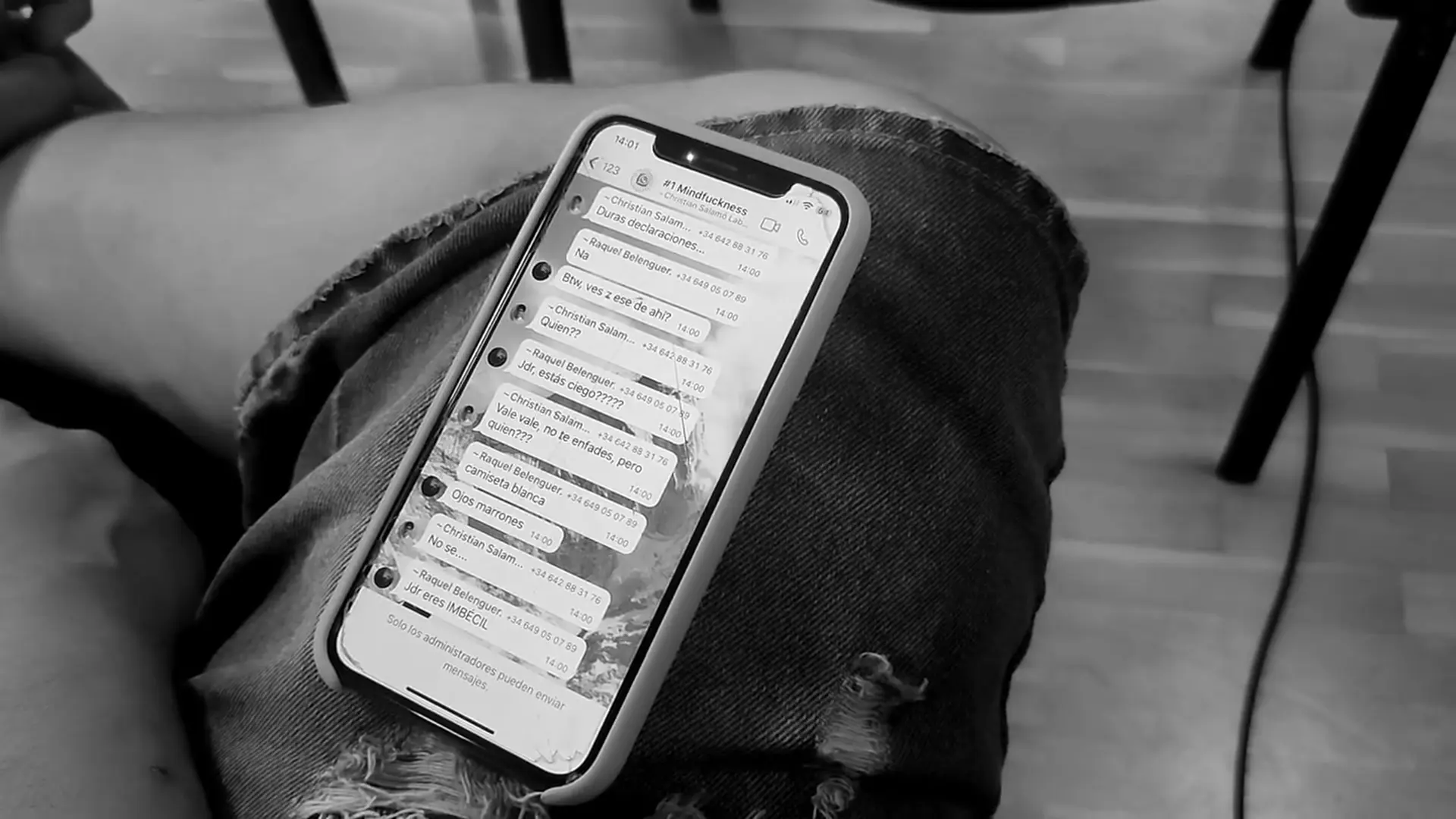
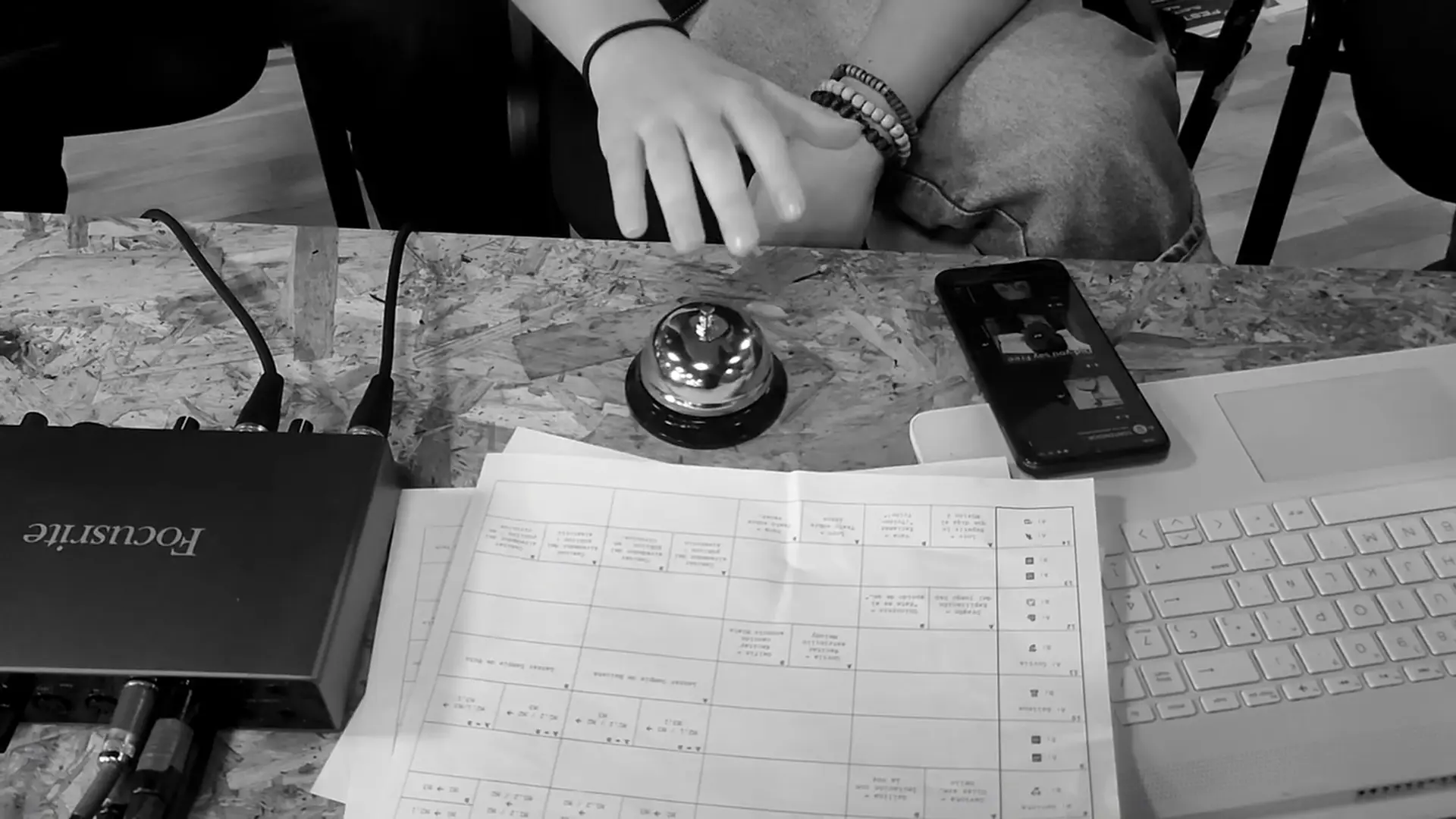
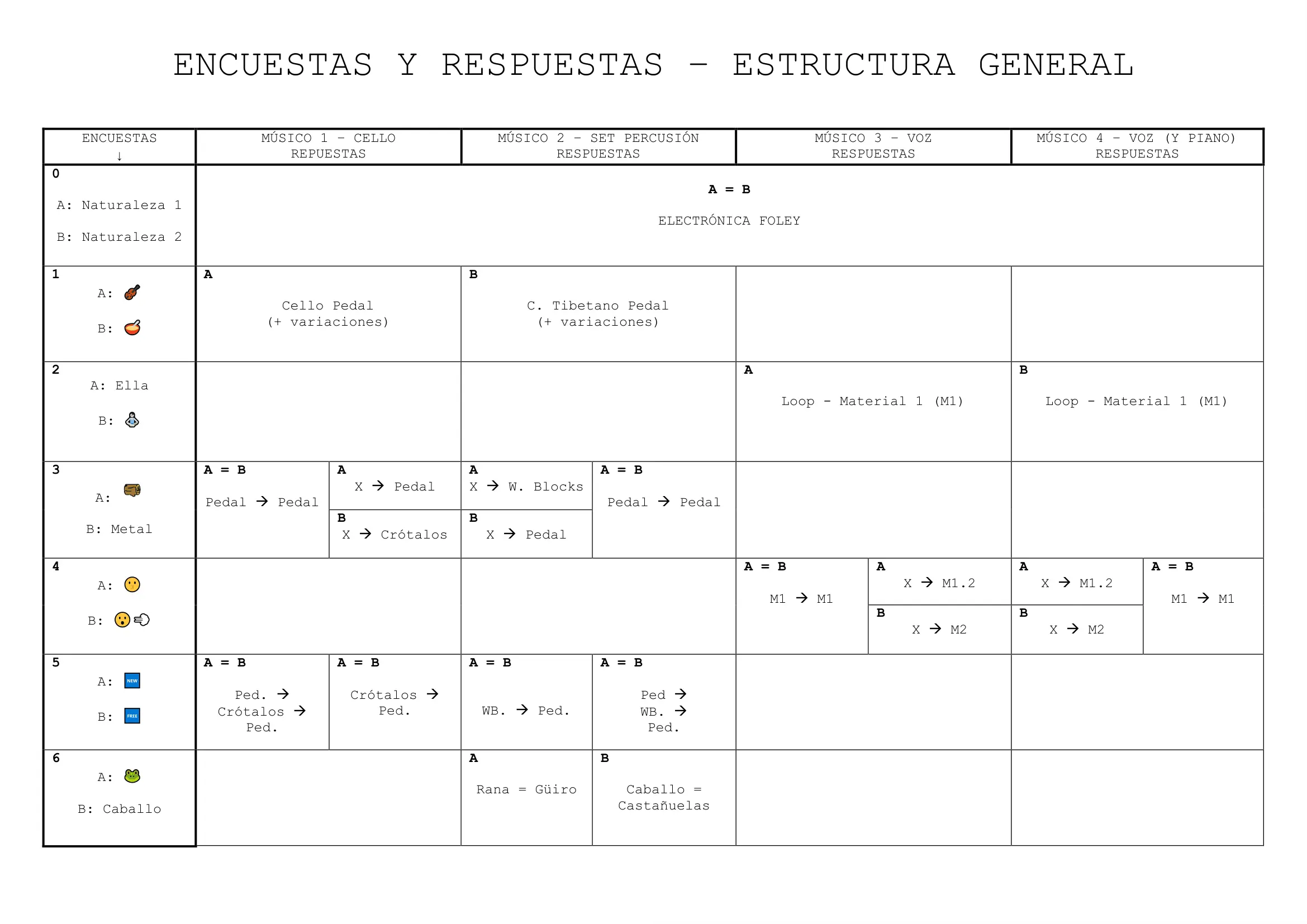
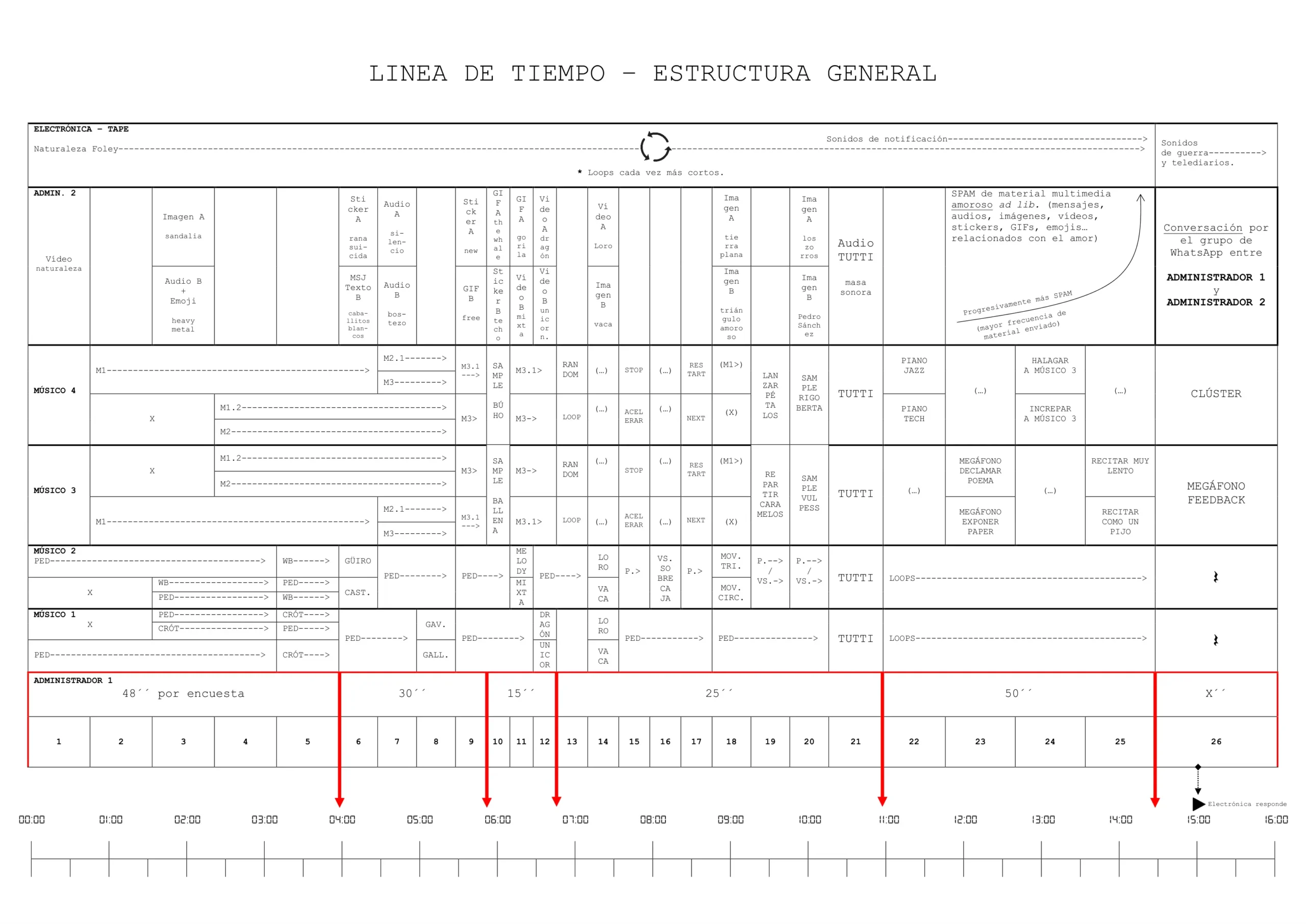
In Mindfuckness, the audience accesses a WhatsApp group created specifically for the performance through a QR code, responding to polls and activating different sonic, musical and visual materials in real time. Depending on the most voted option, the musicians perform one set of materials or another, while the administrators send messages, images, audios and videos that the audience must play from their own devices. The piece therefore incorporates not only digital interaction, but also the sound of the mobile phones themselves —notifications, multimedia playback, light presence and bodily presence— as part of the acoustic space.
The work is structured as an inversion of the usual concert ritual: here, the audience is not only allowed to use their phones, but required to do so. Seated in the centre, in a circle, surrounded by the four loudspeakers and the four performers, they take part in a device in which the apparent democratisation of the experience coexists with a previously fixed system of rules. From there, the piece explores a continuous play between signifier and meaning, literalness and metaphor, translating emojis, texts and images into sonic, gestural and spatial actions. The poll structure alternates binary opposition, superposition and chance, generating a kind of “programmatic work” for the twenty-first century.

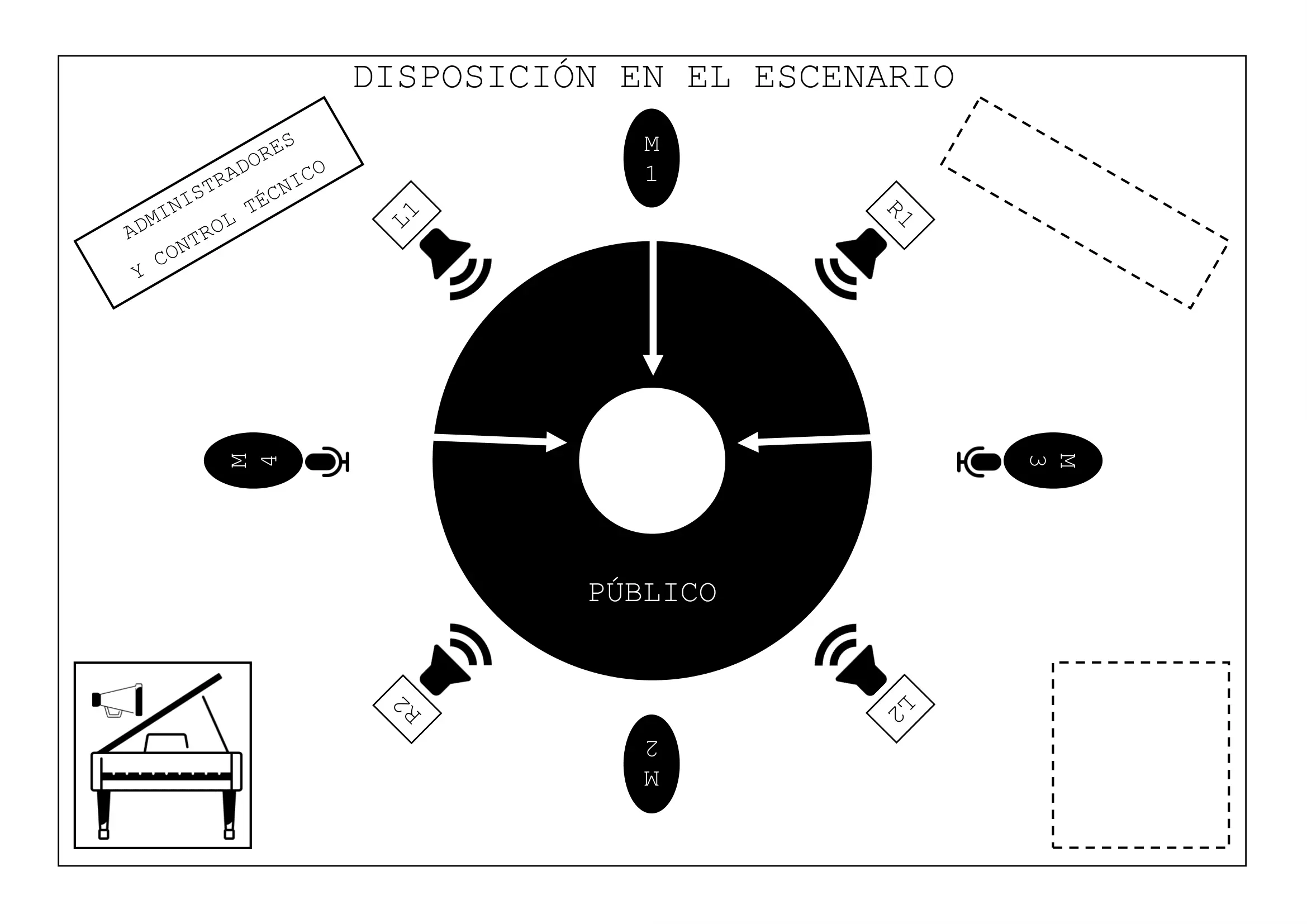
Conceptually, Mindfuckness presents itself as a kind of guided meditation systematically interrupted by virtual communication, raising a paradox characteristic of the present: the need to slow down, pay attention and become aware of one’s surroundings in the face of a culture of hyperconnection, speed and dispersion. From this point, the work also reflects on an increasingly hybrid idea of nature, in which the physical and the digital no longer appear as separate spheres, but as overlapping realities that condition our perception, our listening and our way of being present.